
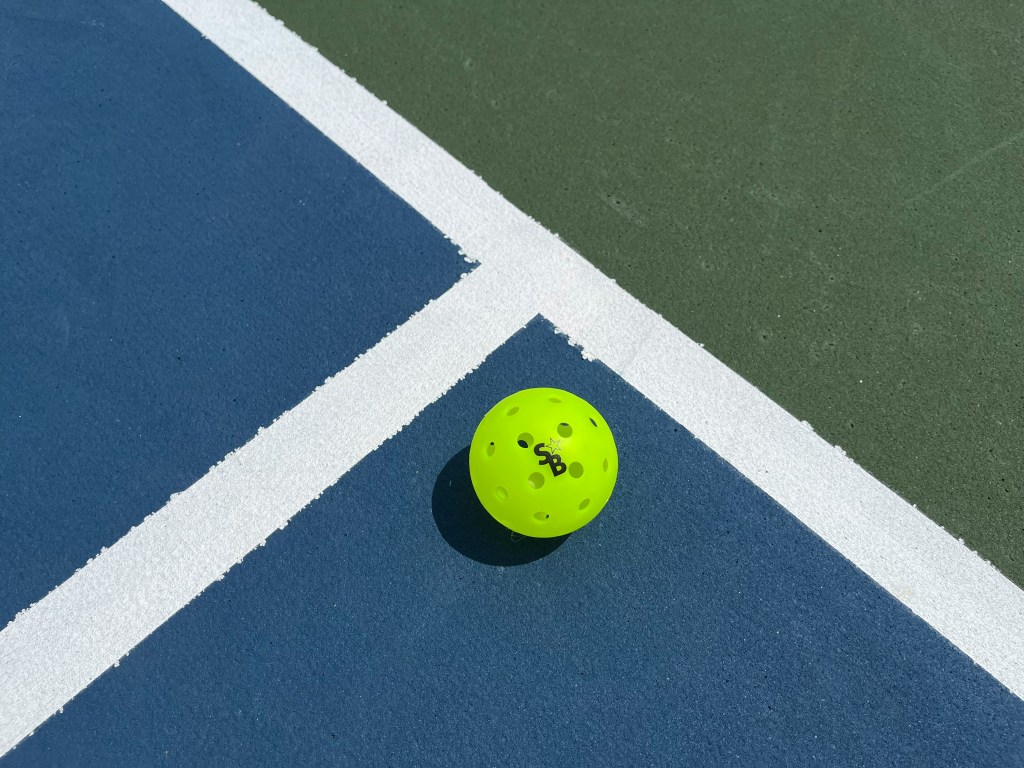
Pickleball is one of the fastest-growing sports in the U.S., and for good reason: it’s fun, social, easy to learn, and a great workout at any age. Whether you’ve just heard about it or are finally ready to step on the court, this guide will walk you through everything you need to get started — from the rules and scoring to the gear and strategies to help you feel confident from day one.
What Is Pickleball?
Pickleball is a paddle sport that combines elements of tennis, badminton, and ping pong. It was invented in the mid-1960s in Washington state by three dads looking for a fun backyard game for their families. Since then, pickleball has exploded in popularity across the U.S. and around the world. Today, it’s especially popular among adults 50 and older but is gaining traction with all ages and skill levels.
The game is played on a court similar in size to a badminton court — 20 feet wide by 44 feet long — with a net slightly lower than a tennis net. Players use solid paddles (larger than ping pong paddles but smaller than tennis rackets) and a lightweight plastic ball with holes, similar to a wiffle ball.
Because of its smaller court and slower pace compared to tennis, pickleball is accessible to beginners but still challenging enough to be competitive and fun. It’s a social sport, often played in doubles, making it a great way to meet new people and stay active.
//embed.typeform.com/next/embed.js🎯 5 Strategic Pickleball Shots Every Woman Should Master
Learn exactly when and how to use game-changing shots like the third shot drop, reset, and crosscourt dink — and avoid the common mistakes that keep most players stuck.
Download the Free PDF GuideBasic Rules of Pickleball
Court Layout
Pickleball courts measure 20 feet wide by 44 feet long for both singles and doubles. The court is divided into two halves by a net that is 36 inches high at the sidelines and 34 inches at the center. The court includes a 7-foot non-volley zone on each side of the net, called “the kitchen,” where volleying (hitting the ball before it bounces) is not allowed.
The court markings are similar to a tennis court but smaller and with clearly marked service zones.
Serving Rules
Serving is the only time a player or team can score points, so it’s a crucial part of the game. Here’s how it works:
- The serve must be made underhand, with the paddle contacting the ball below the waist.
- The server must stand behind the baseline (the back line of the court) and hit the ball diagonally into the opponent’s service box.
- The ball must clear the non-volley zone (the kitchen) on the opponent’s side.
- Unlike tennis, there is only one serve attempt allowed (no second serve).
- After the serve, the ball must bounce once on each side before volleying is allowed (this is called the “double bounce rule”).
Double Bounce Rule
The double bounce rule helps keep rallies fair and slower-paced, encouraging longer exchanges rather than quick volleys. After the serve, the receiving team must let the ball bounce before returning it, and then the serving team must also let it bounce before hitting it back. Only after these two bounces can players volley the ball in the air.
Scoring
- Only the serving side can score points.
- Games are generally played to 11 points, and a team must win by 2 points.
- Points are scored when the opposing team faults, which can happen if they:
- Hit the ball out of bounds
- Volley the ball in the kitchen
- Fail to return the ball
- Violate serving rules
The Kitchen (Non-Volley Zone)
The kitchen is a 7-foot area on both sides of the net where volleying is prohibited. This rule prevents players from dominating the net and makes gameplay more strategic. Players can enter the kitchen to play a ball that has bounced but cannot volley while standing inside it.
Understanding and respecting the kitchen is one of the trickiest rules for beginners but also one of the most important.
Pickleball Gear You Need
Paddles
Paddles are your primary tool for playing pickleball, and choosing the right one can make a big difference in your enjoyment and performance.
- Wooden paddles are the most affordable and great for beginners practicing casually. They are heavier and less maneuverable.
- Composite paddles use a combination of materials like fiberglass and polymer cores. These are lighter and provide better control and power.
- Graphite paddles are the lightest and most expensive, favored by serious players for their balance of power and control.
Beginner paddles typically cost between $30 and $100, with brands like JOOLA, Selkirk, and Engage offering great options.
Shoes
Good footwear is essential for preventing injury and improving movement. Look for shoes designed specifically for court sports, which provide lateral support for quick side-to-side moves. Avoid running shoes, which lack this support and can increase your risk of ankle injuries.
Popular court shoe brands for pickleball players include ASICS, New Balance, and Nike.
Balls
Pickleball balls differ for indoor and outdoor play:
- Outdoor balls are harder, made to withstand wind and rough surfaces, with smaller holes.
- Indoor balls are softer and have larger holes to reduce bounce on smoother surfaces.
Beginners can start with a few outdoor balls like the Onix Pure 2 or indoor balls like the Jugs Indoor balls.
Optional Accessories
- Pickleball bags: Convenient for carrying paddles, balls, and accessories.
- Eyewear: Protective goggles or glasses can help prevent eye injuries from fast-moving balls.
- Water bottles and towels: Stay hydrated and comfortable during play.
Beginner Tips & Strategies
- Focus on consistency: Instead of hitting hard shots, aim to keep the ball in play and force your opponents into errors.
- Play with a partner who is patient and experienced: This helps you learn without pressure.
- Practice the serve: A good serve can give you a tactical edge and control of the game.
- Learn to dink: Dinking is a soft shot played close to the net, a fundamental skill in pickleball.
- Avoid the kitchen until confident: Stepping into the kitchen to volley without mastering the rules can lead to faults.
- Stay low and balanced: Bend your knees and keep your paddle in front to react quickly.
- Watch and learn: Observe experienced players or instructional videos to understand positioning and shot selection.
Where to Play Pickleball
Finding places to play is easier than ever. USA Pickleball’s website offers a comprehensive place finder tool, where you can search by city or zip code to locate nearby courts.
Besides public parks and recreation centers, many gyms and community centers have pickleball courts. Meetup.com and Facebook Groups also offer ways to connect with local pickleball communities, find partners, and join social games or tournaments.
If you live in or near Orange County, CA, some popular spots include Irvine Regional Park, Tustin Sports Park, and the City of Orange Community Center.
Frequently Asked Questions
Is pickleball hard to learn?
No, pickleball is designed to be easy for beginners. Most people learn the basic rules and start playing casually within a few sessions.
Can seniors play pickleball?
Yes! In fact, pickleball is especially popular among seniors because it is low-impact and provides great social and physical benefits.
How much does it cost to get started?
Basic equipment (paddle, balls, shoes) can be bought for under $100. Many community courts are free to use.
How long does a game last?
Games to 11 points usually last 15–20 minutes, making pickleball perfect for quick but effective exercise sessions.
Can I play pickleball indoors?
Yes, many gyms and indoor sports facilities offer pickleball courts.
Conclusion & Next Steps
Now that you know the basics, it’s time to get out there and play! Whether you’re looking for a new hobby, social activity, or a way to stay active, pickleball offers something for everyone.
Bookmark this guide, grab your paddle, and remember — everyone was a beginner once. For your next step, check out our detailed [The Ultimate 2025 Pickleball Paddle Buying Guide] to find the perfect paddle for your style and budget.
Don’t forget to join local pickleball communities and keep practicing — the more you play, the better and more confident you’ll become.
 Her Paddle
Leave a comment